In a time marked by profound environmental, social, and economic transformation, architecture is increasingly recognised as a strategic force shaping Europe’s future. From tackling the housing crisis to advancing the green and digital transitions, the built environment plays a central role in delivering sustainable, inclusive, and high-quality living spaces for all.
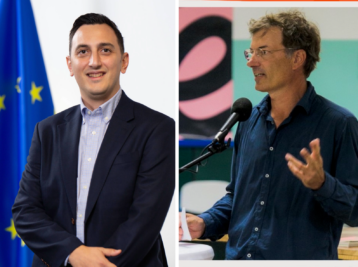
In this in-depth exchange with the President of the Architects’ Council of Europe, European Commissioner Micallef reflects on the evolving role of architecture across EU policy priorities. The conversation opens with a personal perspective—drawing on his upbringing in Malta—to explore how architecture shapes daily life, communities, and a sense of belonging, echoing the principles of the “15-minute city.”
Throughout the interview, Daniel Fügenschuh, ACE President raises key questions on behalf of the profession, addressing challenges such as the shift towards socially driven architecture, barriers faced by young practices, and the need to scale up high-quality, community-focused projects. The discussion also highlights the role of major EU initiatives, including the New European Bauhaus, in fostering innovation, sustainability, and inclusiveness in the built environment.
The dialogue further explores issues of mobility, global competitiveness, and the position of architecture within Europe’s cultural and economic landscape. It underscores the importance of enabling architects to work across borders, access opportunities, and contribute to shaping Europe’s future both within and beyond its borders.
Addressing architects across Europe, Commissioner Micallef delivers a clear message: the profession is not only about designing buildings, but about shaping resilient, inclusive societies. As Europe navigates an increasingly complex landscape, this exchange with the ACE President reaffirms the central role of architects as agents of change—bridging culture, sustainability, and innovation to create meaningful spaces for present and future generations.
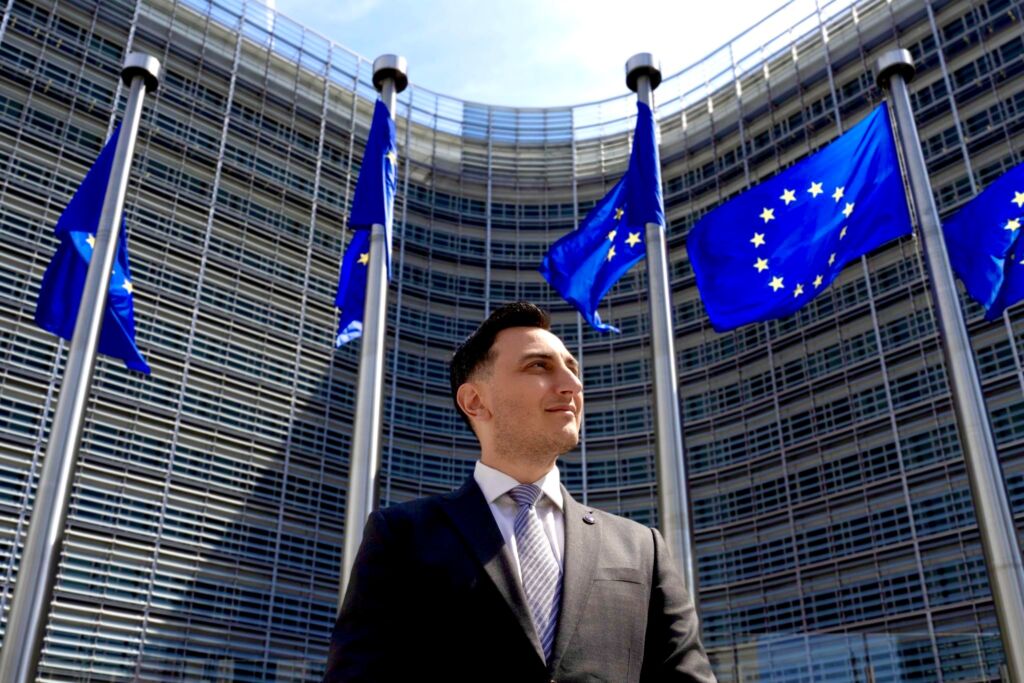
Picture: European Commision
ACE President: Commissioner Micallef, architecture plays a fundamental role in shaping how we live, work, and interact with one another.
Commissioner Micallef: “Before turning to specific policy matters, could you reflect on how your experiences growing up in Malta have shaped your understanding of architecture’s role in society? In particular, how have these experiences informed your perspective on the “15-minute city” approach being adopted across our cities.
Growing up in Malta, with its compact towns, layered history and close-knit communities, allowed me to experience firsthand how architecture and urban layout shape daily life, social interaction and a sense of belonging. I believe this resonates with the principles of the 15-minute city, which builds on proximity, sustainability, equity, and design that is made for people.
Across the EU, we can see that cities are delivering policy priorities, from competitiveness and innovation to climate action, resilience, and social cohesion. At the same time, they face complex challenges. Affordable housing, mobility, demographic change, social inclusion, and the green and digital transitions are just some examples. Many cities are already responding with innovative strategies that involve local authorities, stakeholders, and citizens.
The 15-minute city is one model that cities can adapt to their own needs and use to improve overall quality of life. However, its success depends on safe and accessible mobility networks, equitable planning and strong local participation. In this context, the quality of architecture and the living environment are essential. This is in line with the values of the New European Bauhaus, which promotes sustainable, inclusive, and high-quality built environments rooted in Europe’s cultural diversity”.
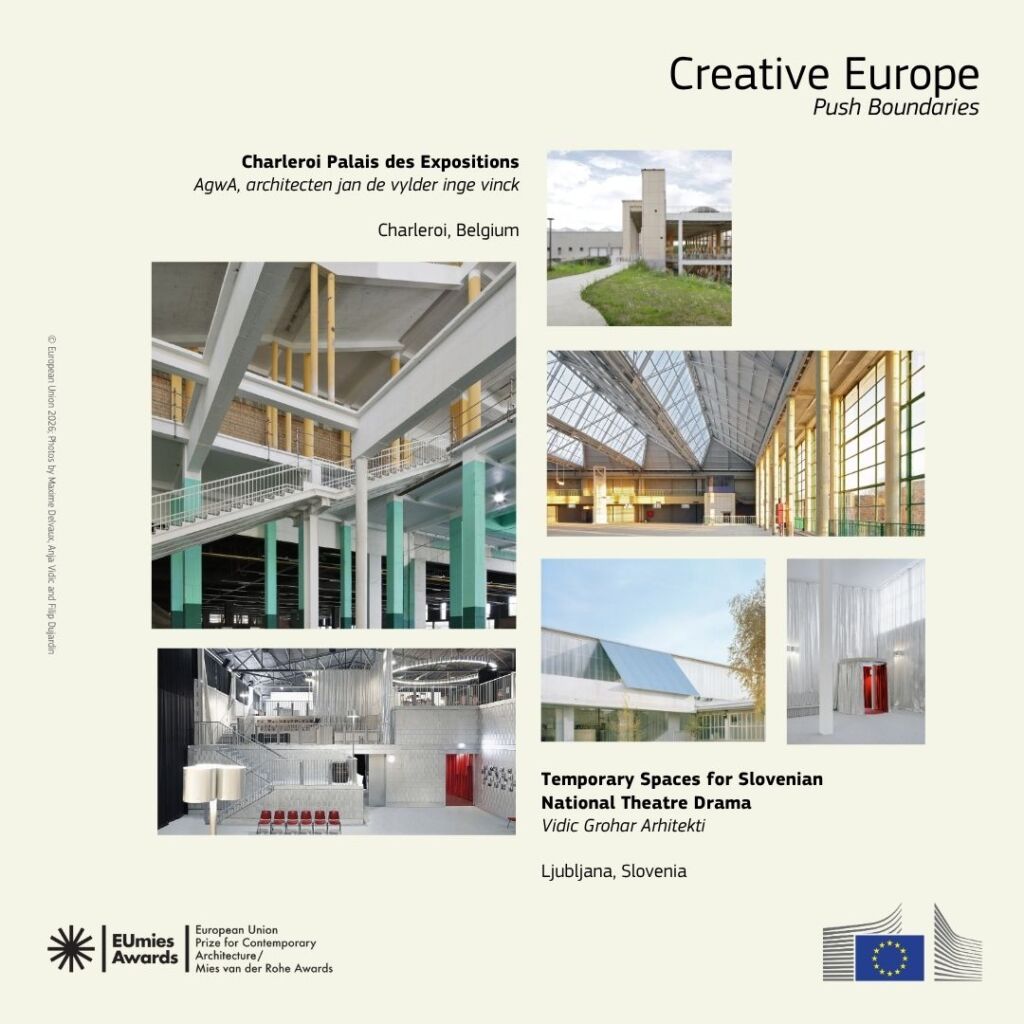
ACE President: In February, the 2026 finalists of the European Union Prize for Contemporary Architecture – Mies van der Rohe Award were announced. For nearly 40 years, the EU Mies Awards have recognized excellence in architecture in Europe. We also see a shift from Start architects to social architecture. In recent years, EU and international awards reflect a broader shift within the profession—from iconic “starchitect” projects toward socially driven and community-focused architecture. What do you think are the main barriers (young architecture practices) and enablers to scale up and mainstream these exemplar projects and the high quality architecture for everyone.
Commissioner Micallef: “Architecture goes far beyond form and function. It is a powerful tool to shape more inclusive, sustainable, and resilient societies. The work of architects, both established and emerging, is essential to advancing these shared European priorities.Over the past decades, the European Union Prize for Contemporary Architecture – Mies van der Rohe Award (EUmies Awards) has reflected the evolution of architectural practice in Europe. The EUmies Awards highlight the strength and competitiveness of Europe’s architectural sector, where collaboration and the exchange of knowledge across disciplines lead to innovative and high-quality outcomes.
For example, works from recent finalists and winners often focus on housing, reuse, collective spaces, and engagement with local communities. These projects remind us that architecture is not only about designing buildings. It is about transforming realities. It is about working with what already exists, engaging with complexity, and opening new possibilities for how we live together.
I’m aware that scaling up these approaches is a challenge. Take for example procurement systems that prioritise lowest cost over long-term quality, limited access to commissions for young and emerging practices, or regulatory frameworks that favour standardised solutions. Translating small-scale projects into larger public programmes can also be challenging
In this context, it is important that systems do not unintentionally reduce architects to procedural role, but instead empower them to contribute meaningfully to design quality, innovation and the creation of spaces that truly serve people.
At the same time, we see commitment to architectural quality and long-term social value. To open and well-designed architectural competitions that create opportunities for young practices. To policies supporting renovation, adaptive reuse and sustainable construction; and initiatives such as the New European Bauhaus.
Peer-learning initiatives, like the one we launched in 2023 funded under Creative Europe, also play an important role. They support decision-makers in the fields of architecture and the built environment, culture and heritage, as well as spatial planning and sustainable development at local, regional and national levels to the benefits of all citizens.
In this context, the EUmies Awards make an important contribution. Yes, they recognise excellence, but not only that. The initiative gives visibility to models of architecture that are socially responsible and environmentally aware. The awarded projects embody the spirit of the New European Bauhaus, showing how sustainability, aesthetics, and inclusion can come together to improve everyday life and create meaningful spaces for citizens across Europe. This approach can inspire policies and practices aimed at delivering high-quality living environments for everyone”.
ACE President: At the end of 2025, the EU Commission adopted a long awaited package on Housing which includes a Communication on the New European Bauhaus. How can the NEB serve as a catalyst for EU policies that support architects and communities in creating buildings that are both innovative and enduring? What role can the NEB play in tackling the housing crisis?
Commissioner Micallef: “The New European Bauhaus (NEB) is well positioned to be a point of reference for EU housing policies. It emphasises the integration of sustainable, cultural, social, and democratic values into the design of the built environment. Central to the NEB’s vision is the idea that buildings are much more than technical assets and housing should embody dignity, security, and equality. The regeneration of neighbourhoods, building renovation and refurbishment, and better use of existing building are other focus areas of the NEB. It aims to provide solutions that local authorities and practitioners can replicate. The NEB Academy supports this vision by providing targeted trainings to workers and promoting innovation and research in the sector.
In support of the Commission’s Affordable Housing Plan, the NEB will offer evidence-based tools and spaces where anyone, including architects, can meet and work together to create affordable, innovative housing solutions. The new NEB Lab on Housing exemplifies this approach. It provides a space where the NEB community can further explore solutions for housing affordability and resilience”.
ACE President: With the Culture Compass for Europe, the European Commission positions culture not only as a sector to be supported, but as a strategic asset—one that strengthens Europe’s competitiveness, reinforces democratic values, and improves everyday life for its citizens. In this sense, the initiative can be seen as a cultural “competition” for Europe’s future: making Europe “proud” again through creativity, quality, and shared values. How can the EU, by mobilising the cultural and creative industries—particularly architecture—enable the sector to thrive while responding meaningfully to the major challenges of our time: climate change, the housing crisis, the digital transition, and mounting economic pressures?
Commissioner Micallef: “The Culture Compass for Europe which I presented last November positions cultural and creative sectors as strategic drivers of Europe’s transformation, rather than peripheral activities. They can play a key role in addressing major challenges such as climate change, the housing crisis, the digital transition, and economic pressures. I reaffirmed this on previous occasions, and I still stand by it: culture is Europe’s first line of defence.
Cultural sectors, including architecture, can lead the green transition by promoting energy efficiency, sustainable materials, and climate-resilient design, while balancing innovation with the protection of cultural heritage. These are not abstract principles. They are tangible, built realities that demonstrate how the green transition can be lived, experienced, and shared by all.
Architecture is particularly strategic within the cultural and creative sectors because it connects culture, economy, environment, and everyday life. Architecture reflects our histories, responds to our present challenges, and projects visions of our shared future. Investing in high-quality built environments strengthens local identity, fosters wellbeing, and supports social cohesion. By promoting a shared culture of architecture in Europe through instruments such as the European Union Prize for Contemporary Architecture – Mies van der Rohe Award (EUmies Awards) and the New European Bauhaus, the EU can mobilise creativity and innovation to address societal challenges while reinforcing European values.
I am convinced that the digital transition can offer opportunities to increase efficiency and expand creative expression, for example through AI-assisted tools. But let me be very clear: AI must remain human-centred and respect creators’ rights”.
ACE President: The latest ACE Sector Study shows that 27% of European architects are under 40, highlighting the profession’s relative youth. At the same time, 16% of respondents have seriously considered working in another Member State, and an increasing number of architects are trained outside their home countries. While this indicates a strong interest in cross-border mobility, in practice, many architects do not take this step. What measures can the EU take to better support the mobility of architects, especially young professionals, across Europe, and help turn this interest into tangible opportunities?
Commissioner Micallef: “Cooperation and exchange are at the heart of Europe’s culture and cultural policies. As in many other areas, cross-border collaboration and mobility are essential for creative professionals’ careers. They are also needed to develop a European cultural space that fosters dialogue between creators and citizens. They boost competitiveness, enable cultural works to circulate across borders, reach wider audiences, and support the growth of Europe’s creative economy.
We welcome the Architects’ Council of Europe’s observation in the public consultation on the Skills Portability Initiative that “the regulatory requirements of professional recognition are by no means the major hindrances to cross-border mobility.” That said, we note that there is still room for improvement to make the regime of automatic recognition of professional qualifications truly automatic and seamless – including for architects. That is what we are working on in the context of our upcoming Skills Portability Initiative.
Let me also mention the role that EU public procurement rules aim to open markets for services, supplies and works purchased by public authorities (and to other entities obliged to apply the public procurement rules) to EU-wide competition. This includes works contracts and architectural design contests, in which economic operators from across Europe can compete on equal terms. It may be also observed that contracts awarded under the EU public procurement rules are of some significant value and as such are normally awarded to companies, while individual architects are their employees or (sub)contractors. Public procurement rules place no limitations on nationality of architects employed within works or architectural design public contracts”.
ACE President: As architects, we see first-hand that European architects and designers are globally competitive—something illustrated by iconic international projects such as Olympic stadiums in China designed by EU architecture offices. These projects not only represent significant economic exports of European expertise, but also serve as cultural statements, showcasing Europe’s creativity, innovation, and design values worldwide. From your perspective, how can you collaborate with EU trade and competitiveness policy—particularly on market access, public procurement, and export finance—better support architects working internationally, while ensuring fair competition and genuinely reciprocal conditions in global markets?
Commissioner Micallef: “EU trade policy aims to enhance competitiveness and improve market access by addressing barriers to trade. Professional services — including architectural services — are a priority in EU trade negotiations. Our aim is to remove barriers and secure meaningful market access for European architects and firms operating abroad. In trade negotiations, the Commission focuses on commitments that allow establishment, cross-border supply, and access to public procurement markets.
Equally important are disciplines on domestic regulation, such as requirements for transparent procedures, objective criteria, and the right to receive a written decision on an application within a specified timeframe. They provide legal certainty, particularly for Small and Medium-sized Entreprises (SMEs) that make up much of the architectural sector.
We are building on a solid multilateral foundation, as architectural services are among the more liberalised professional sectors under World Trade Organisation rules. Public procurement commitments further reinforce market opportunities, given architecture’s central role in infrastructure and public works.
Finally, recognition of qualifications is key. The recent EU–Canada Mutual Recognition Agreement for Architects is a landmark step. It facilitates cross-border practice and creates new opportunities for European professionals”.
ACE President: Architecture in the EU sits at the crossroads of culture, creativity, and high-value economic activity. While creative industries do benefit from EU funding and support instruments, these tools are not always fully tailored to the architecture sector’s hybrid nature. From your perspective, how could public sponsorship rules, incentives, or adapted funding instruments better reflect this specificity and support architects competing internationally, while preserving fair competition and reciprocal conditions? In particular, architecture not only drives cultural value but also contributes indirectly to economic activity, for example by activating tourism in European cities. How can EU policies recognize and leverage this broader impact of architecture on culture, economy, and daily life?
Commissioner Micallef: “The appointment of a dedicated Commissioner for Sustainable Transport and Tourism shows that Europe’s tourism sector is a priority for this Commission. Integrating tourism with transport policy is a recognition that mobility, accessibility, and connectivity are cornerstones of the EU Single Market. This can also foster balanced growth by directing tourists to lesser-known destinations.
The forthcoming European Strategy for Sustainable Tourism will further strengthen these synergies. It will include contributions from sectors like architecture to amplify economic, cultural, and environmental benefits.
Smart, sustainable architecture is the backbone of mobility infrastructure such as airports and train stations, which are the EU’s first impression for international visitors. These gateways set the tone for the entire journey, blending functionality with aesthetic appeal. This is also at the core of the New European Bauhaus initiative, which funds innovative designs that prioritise beauty, sustainability, and inclusivity, to the benefit of citizens and tourists alike.
Hotels must pioneer energy- and water-efficient designs, aligning with EU legislation and programmes that incentivise low-carbon buildings. There is a market of eco-conscious tourists demanding green accommodation. Museums, attractions, and visitor centres – especially those near ancient monuments – demand accessible, scalable architecture that fits in with historic contexts, accommodating rising visitor numbers while preserving cultural integrity”.
ACE President: Architecture was an official Olympic competition category from 1912 to 1948, with medals awarded for sports-related design. Today, architecture still plays a central role in the Olympic Games—shaping stadiums, cities, and long-term public value. From your perspective, could architecture once again be more explicitly recognised within the Olympic ecosystem, not necessarily through medals, but through EU-supported initiatives that link sport, culture, sustainability, and fair international competition?
Commissioner Micallef: “Architecture is central to how sport is experienced. It shapes athletic performance, accessibility, the way people watch sport, and the long-term legacy of major sporting events. We want Olympic and large-scale sports venues to be durable public assets, serving communities long after competitions end.
That said, let me recall that any formal recognition of architecture within the Olympic framework is a matter for the International Olympic Committee(IOC) and the wider Olympic Movement. The autonomy of sport is a fundamental principle which the EU fully respects. Decisions on competition categories, awards or official recognition rest with sport’s governing bodies.
Where the EU can add value is by strengthening the links between architecture, sport, culture and sustainability. The principles of the New European Bauhaus are also relevant to sports infrastructure.
EU programmes can support research, pilot projects, and cross-border cooperation on circular construction, adaptive reuse, and low-carbon design for sports venues. They can also encourage host cities, where appropriate, to embed these principles early in planning processes This would ensure that major sporting events deliver lasting public value, fair competition, and meaningful cultural and environmental legacies.”
ACE President: Finally, in these uncertain times, what message would you like to send to European architects, as agents of change shaping our shared future?
Commissioner Micallef: “Architecture has always been a mirror of society. It reflects our histories, responds to our present challenges, and projects visions of our shared future. Today, as we face profound environmental, social, and economic transformations, architecture plays a crucial role in shaping more inclusive, sustainable, and resilient communities.
We must continue to affirm that the role of architects is not limited to processes or permits, but extends to the creative shaping of space, experience and community life.
European architects create and shape the spaces where our societies live, learn, work, and interact. In times of climate transition, housing pressures, and social change, architecture is a responsibility toward communities, future generations, and our shared environment. The decisions architects make today will influence social cohesion, sustainability, and the quality of life for decades to come.
We need to embody a shift in how architecture is conceived today, as a process of transformation: attentive, experimental, and deeply connected to its context. Europe boasts a rich architectural culture and extraordinary diversity of practices, including many young offices experimenting with innovative approaches to design, materials, and collaboration. Supporting these practices, exchanging knowledge, and learning from their experiences is essential to scale up solutions that deliver inclusive, resilient, and sustainable urban and rural environments.
To European architects, my message is: continue to embrace innovation, place social and environmental responsibility at the core of your work and actively engage with communities. Your creativity, expertise, and vision are central to building a Europe that is sustainable, inclusive, and culturally vibrant. Through your work, you can be part of turning societal challenges into opportunities for high-quality living environments for all citizens. You are not only shaping and transforming buildings. You are shaping and transforming the environments in which life unfolds”.