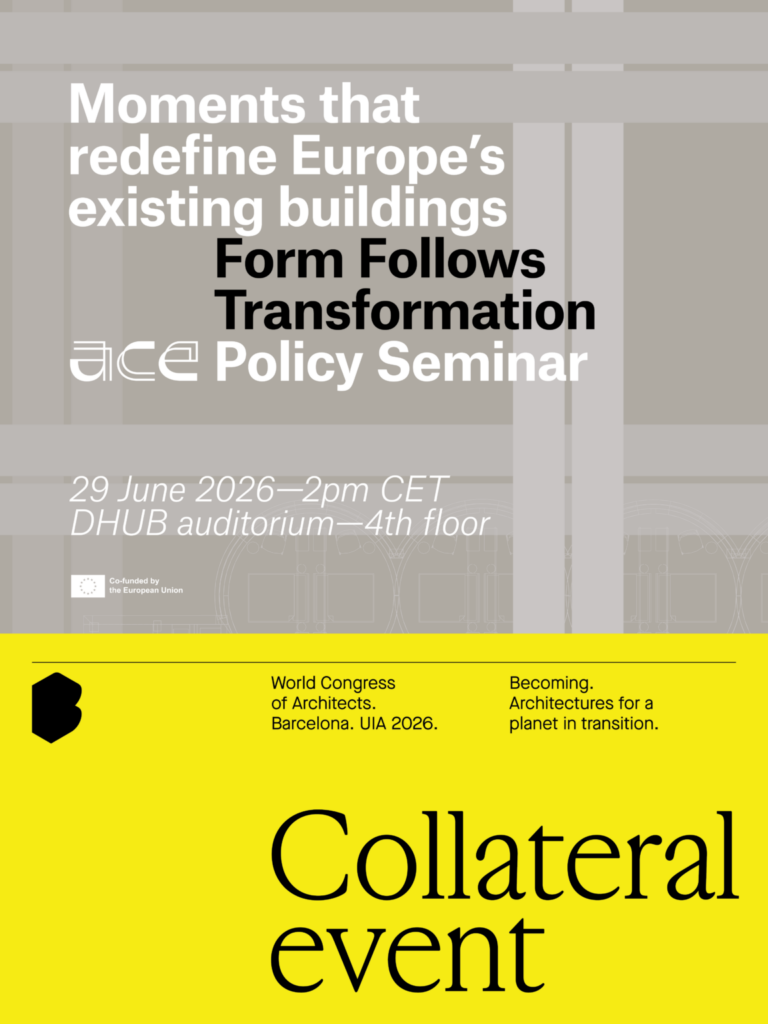
På 29. juni 2026, inden for rammerne af UIA verdenskongres af arkitekter i Barcelona, den Arkitekternes Europaråd (ACE) afholdt det politiske seminar "Form følger transformation: Øjeblikke, der omdefinerer Europas eksisterende bygninger."
At samles omkring 200 deltagere, mødtes arkitekter, politiske beslutningstagere, byrepræsentanter og eksperter fra hele Europa for at drøfte, hvordan omstilling, renovering og tilpasningsdygtig genbrug af eksisterende bygninger kan bidrage til at nå Europas klimaambitioner og samtidig styrke den sociale samhørighed og bevare kulturarven.
Vært på Disseny Hub Barcelona (DHUB), viste seminaret inspirerende arkitektoniske projekter sammen med politiske diskussioner, der demonstrerer, hvordan arkitekter leder overgangen til et mere modstandsdygtigt, bæredygtigt og inkluderende bebygget miljø. åbning af seminaret ACE-præsident Daniel Fügenschuh understregede betydningen af arkitektonisk kvalitet og innovation med hensyn til at reagere på nutidens bymæssige udfordringer: "Vi presser på for et strengt "renovering først"-princip. Nedrivning skal blive den absolutte undtagelse - en sidste udvej, når alle andre kreative muligheder er udtømt."
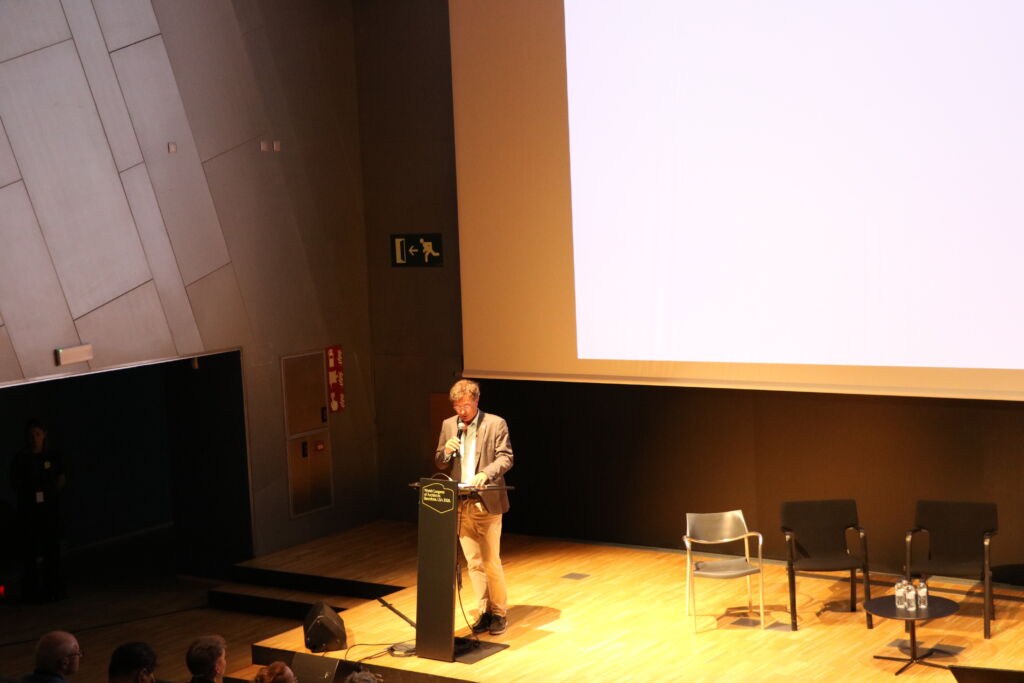
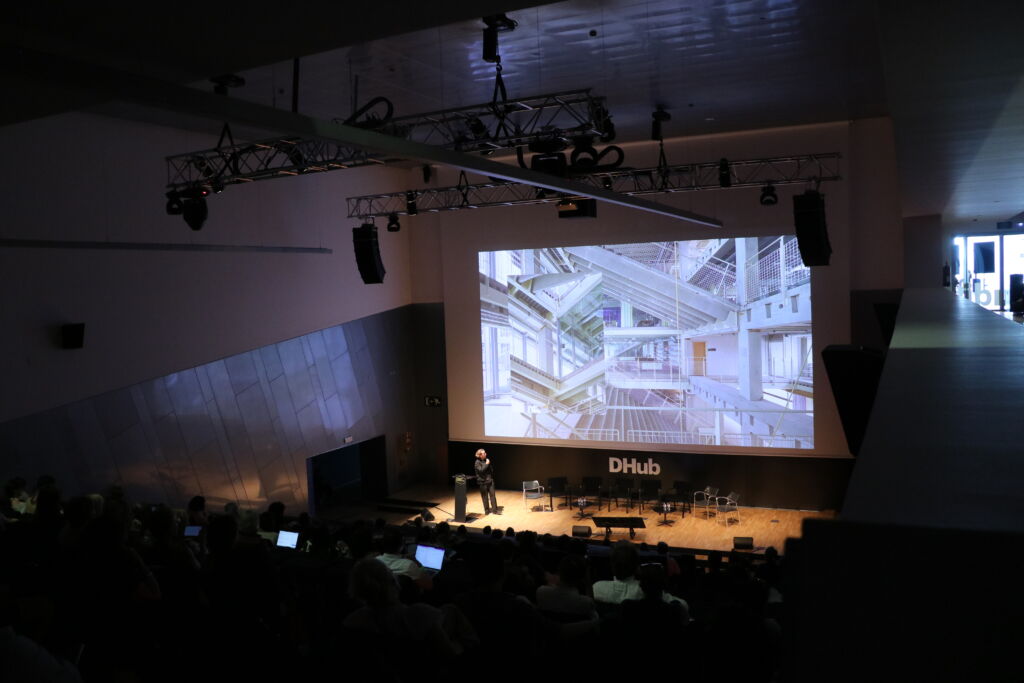
Den første session indeholdt præsentationer af Laurens Bekemans (BC Arkitekter & Studier), Jakob Rabe Petersen (Pihlmann Arkitekter), og Josep Ricart (H Arquitectes), der introducerede udvalgte projekter fra ACE’s “Form følger transformation” udstilling. Deres arbejde illustrerede, hvordan cirkulære designstrategier, omhyggelige interventioner og kreative arkitektoniske løsninger kan frigøre potentialet i eksisterende bygninger, samtidig med at de bevarer deres identitet og imødekommer nutidens behov. Præsentationerne er tilgængelige online via denne link.
Overvejelser om arkitekturens bredere rolle, Laurens Bekemans observeret:
"Ved at overveje de systemer, hvori de er indlejret, forstås bygninger ikke som isolerede objekter. De er resultater af komplekse forviklinger formet af klima, territorium, politik, tid og kultur - hvilket indebærer en praksis, der engagerer sig i flere lag og tidsligheder og skifter arkitektens rolle mod en mere reflekterende og beliggende position baseret på forvaltning, pleje og en fornyet forbindelse til sted."
Præsentation af Thoravej 29 projekt Jakob Rabe Petersen fremhævede værdien af at arbejde med det, der allerede findes:
"Transformation begynder med at anerkende det eksisterende som en kilde til potentiale snarere end begrænsning: et arkiv over ressourcer, spor og beslutninger, der allerede er truffet. I Thoravej 29's tilfælde betød det, at man skulle udvikle betingelserne for, at bygningen kunne genbruge sig selv, så 95% af dets materialemasse i cirkulation på stedet, mens usikkerhed, begrænsninger og nysgerrighed formede processen."
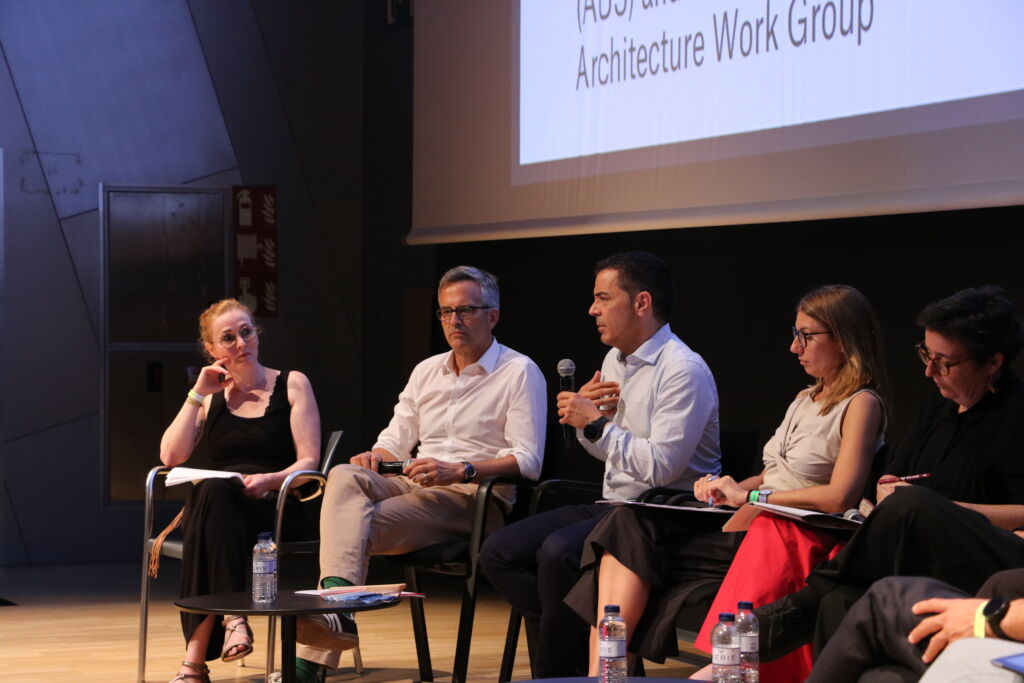
Seminaret blev afsluttet med en orienterende debat på højt plan med deltagelse af ACE's næstformand Elizabeth Gossart og Andro Mänd, byarkitekt i Tallinn og medlem af ACE's bestyrelse. Drøftelserne samlede repræsentanter for EU-institutionerne, de offentlige myndigheder og arkitekterhvervet, herunder Oliver Martin (det schweiziske forbundskontor for kultur) Maria Buhigas (Chief City Architect of Barcelona), Marcos Ros Sempere (medlem af Europa-Parlamentet) og Sandra Bestraten (Dekan for arkitektsammenslutningen i Catalonien).
Oliver Martin understregede behovet for at omplacere transformation som normen snarere end undtagelsen: "Omdannelse og fortsat brug af eksisterende bygninger, reparation heraf og genbrug af materialer er ikke innovationer; de er historiske praksisser, der har formet arkitektur i århundreder. I løbet af de sidste hundrede år er disse principper blevet overskygget af et paradigme for nedrivning og udskiftning. Udfordringen i dag er at genopdage og udvide dem - ikke som ekstraordinære tilfælde, men i stor skala."
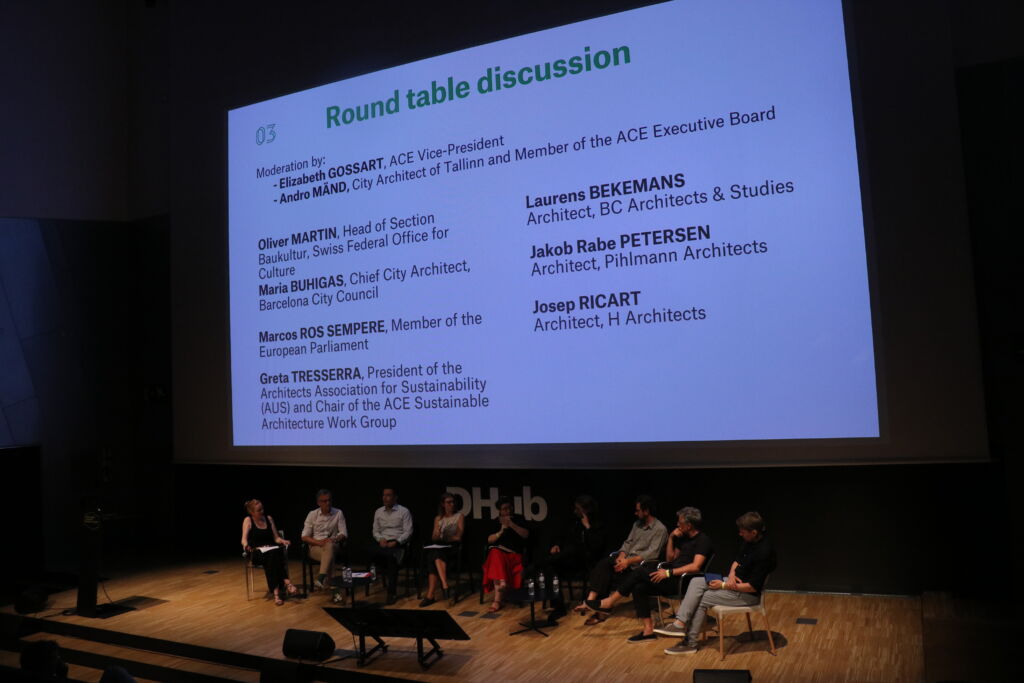
Panelet undersøgte de politiske rammer og samarbejdstilgange, der er nødvendige for at fremskynde omstillingen af Europas bygningsmasse, og fremhævede bidraget fra initiativer såsom Nyt europæisk Bauhaus, den Direktivet om bygningers energimæssige ydeevne (EPBD), og Davos Baukultur-principper fremme af bæredygtig og menneskecentreret renovering af høj kvalitet.
“Form følger transformation” udstilling
Løb ved siden af seminaret, ACE's “Form følger transformation” Udstillingen gav de besøgende mulighed for at opdage innovative arkitektoniske projekter, der demonstrerer, hvordan adaptiv genbrug af eksisterende bygninger kan reducere miljøpåvirkningen og samtidig styrke lokalsamfundene og beskytte kulturarven.
Udstillingen illustrerede, at transformation ikke kun er en klimastrategi, men også en designtilgang, der er i stand til at skabe ny social, kulturel og økonomisk værdi fra det eksisterende bebyggede miljø. Besøgende kunne også udforske de ledsagende “Form følger transformation” pjece, som præsenterer de udvalgte projekter og giver dybere indsigt i designprocesserne, udfordringerne og den arkitektoniske tænkning bag hver intervention. Sammen udgør udstillingen og publikationen en varig ressource, der viser arkitekternes afgørende rolle i udformningen af den bæredygtige omstilling af Europas eksisterende bygninger, samtidig med at deres historie, kontekst og fremtidige potentiale respekteres.