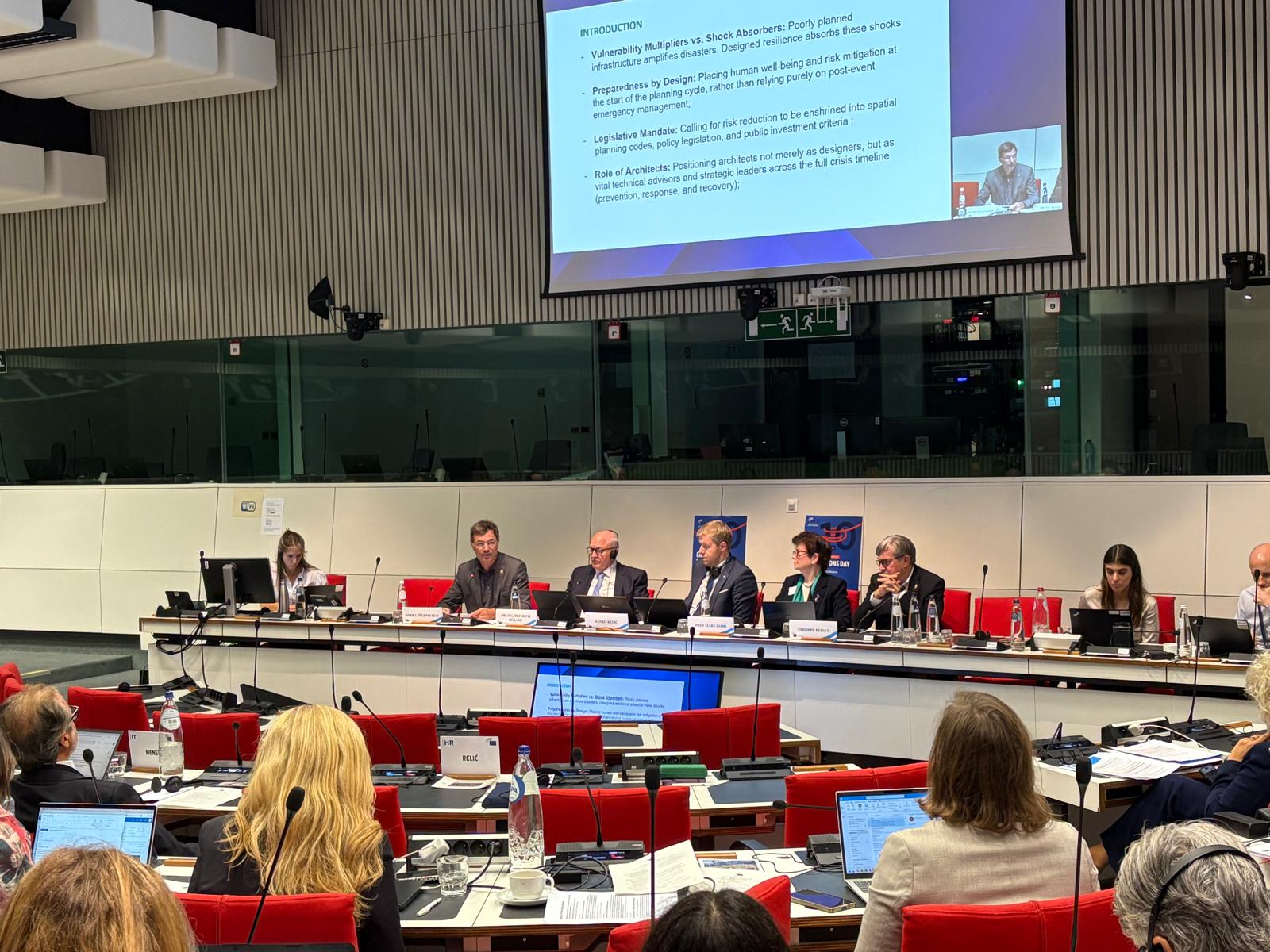
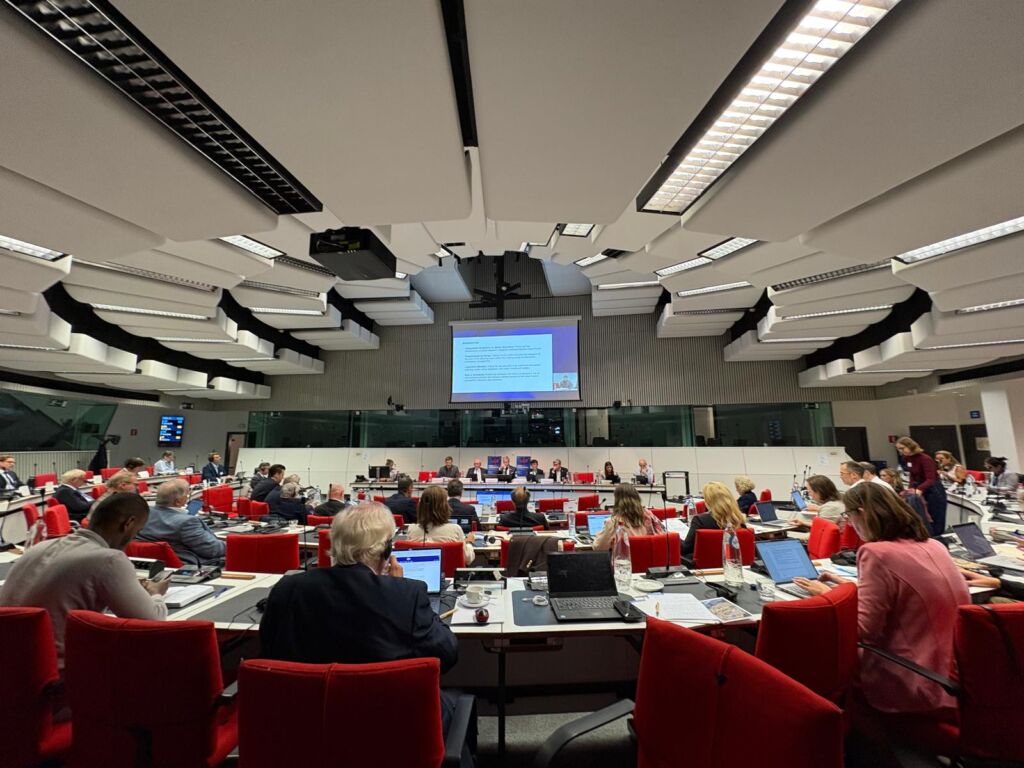
29 de setembro de 2026 — O presidente da ACE, Daniel Fügenschuh, participou no 10.o Dia das Profissões Liberais do CESE, em Bruxelas, subordinado ao tema Preparação na UE: o papel das profissões liberais. No painel sobre prevenção, continuidade e saúde pública, explicou de que forma a arquitetura pode ajudar as comunidades a prepararem-se para as crises.
«Quando a resiliência está integrada na conceção desde o início, o espaço físico funciona como um amortecedor vital», afirmou. Os edifícios e os espaços públicos são locais onde as pessoas experimentam calor extremo, inundações e outros choques. A sua conceção pode aumentar a vulnerabilidade ou ajudar a limitar os danos e apoiar a recuperação.
Três dimensões da preparação
Em primeiro lugar, a Europa tem de conceção para futuros extremos, em vez de se basear em médias climáticas históricas. Soluções baseadas na natureza, telhados verdes e retenção de água local podem ajudar a reduzir inundações e calor urbano. Fügenschuh apontou para Praça de água Benthemplein em Roterdão, concebido por De Urbanisten. É um local para recreação em tempo seco e armazena águas pluviais quando cai chuva forte.
Em segundo lugar, os edifícios necessitam de flexibilidade para apoiar continuidade durante uma crise. Os layouts adaptáveis e os componentes que podem ser desmontados facilitam a alteração da utilização de um edifício, a sua reparação ou a reutilização dos seus materiais. Pakhuset Braunstein em Køge, concebido por ADEPT, ilustra esta abordagem: o edifício foi concebido de modo a poder ser desmontado e, eventualmente, remontado noutro local, se a sua localização costeira o exigir.
Em terceiro lugar, a preparação deve colocar as relações sociais e de saúde das pessoas no seu centro. A boa ventilação, a luz do dia e os espaços confortáveis contribuem para o bem-estar, ao passo que os espaços públicos acolhedores ajudam a construir comunidades mais fortes. Superblocos de Barcelona, uma iniciativa da Câmara Municipal de Barcelona, demonstra como a reafetação das ruas aos peões e à vegetação pode melhorar o ambiente urbano quotidiano.
Uma cultura de prevenção
O presidente da ACE instou as autoridades públicas a reduzirem os riscos no ordenamento do território, na legislação e no investimento público. Salientou a necessidade de avaliar os edifícios vulneráveis, desencorajar o desenvolvimento em zonas de alto risco e identificar terrenos seguros e potenciais abrigos antes de ocorrerem catástrofes.
«Nenhuma profissão pode, por si só, reforçar a resiliência da sociedade», concluiu.
Os arquitetos podem ajudar a moldar o quadro físico, trabalhando em conjunto com profissionais de saúde, engenheiros, peritos jurídicos e financeiros e autoridades públicas para proteger o interesse público.
ACE agradece a Categoria das Profissões Liberais do Comité Económico e Social Europeu para organizar o evento e criar espaço para este intercâmbio entre profissões.
Ver as gravações Aqui.