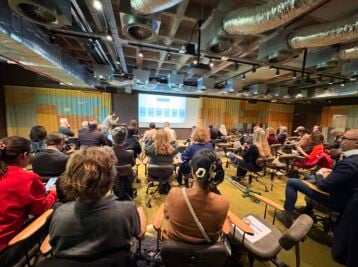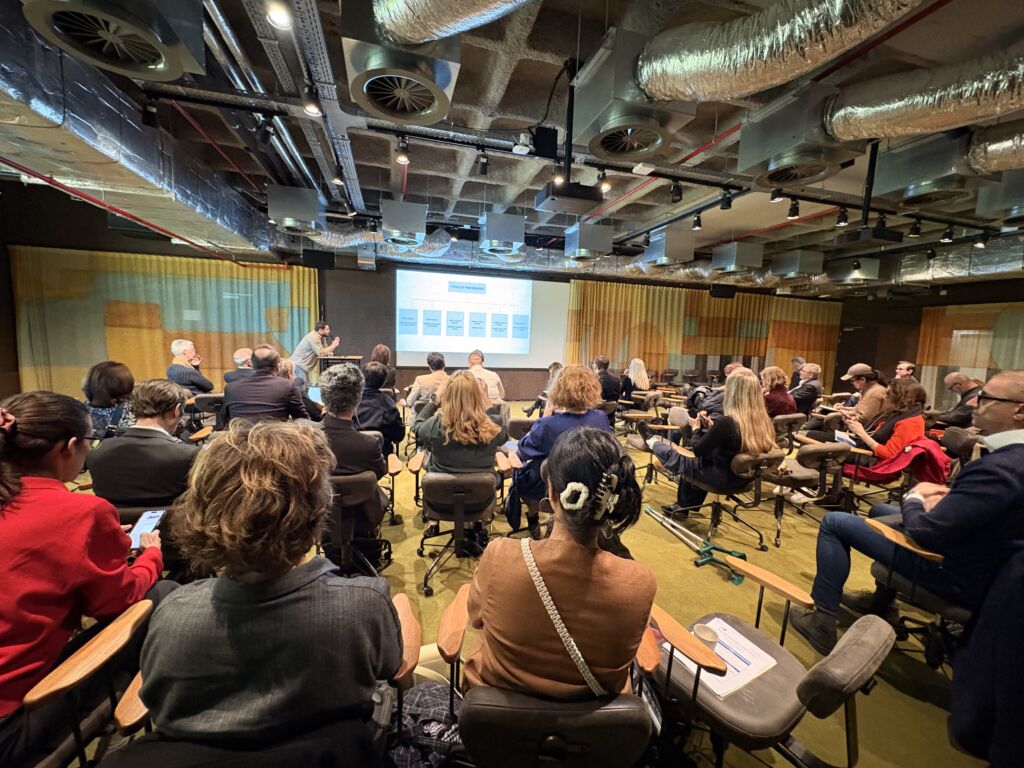
The ARCH-E Consortium and the Architects’ Council of Europe jointly hosted a high-level conference on Architectural Design Competitions (ADCs), bringing together architects, policymakers, public authorities and procurement experts from across Europe to discuss how competitions can strengthen architectural quality, innovation and public value in the built environment.
Held in Brussels; at the MIX, the conference highlighted ADCs as a key instrument for delivering high-quality, sustainable and economically sound architecture, while addressing growing concerns about regulatory fragmentation, procurement pressures and declining access for architectural practices.
The event featured a keynote by Adam Caruso and contributions from leading European practitioners and institutions. Across six thematic sessions, speakers examined both the policy frameworks and practical infrastructures shaping competition culture in Europe.
The Diverse European ADC Landscape
The session on The Diverse European ADC Landscape highlighted significant differences in how architectural design competitions are regulated and implemented across Europe, while pointing to shared structural challenges.
Grazia Tona (from ARCH-E partner Technical University of Eindhoven) emphasised the need for robust, binding regulatory frameworks for ADCs, supported by comparative country profiles developed through the ARCH-E mapping work. These were presented as tools to inform analysis and, crucially, to foster dialogue between clients, professional bodies and policymakers. She also underlined that accessibility must extend beyond participation to include who shapes competition frameworks in the first place.
Peter Legroe (NAV) pointed to persistent systemic gaps in Flanders, including the lack of clear deliverables, mandatory jury evaluation and fair compensation. He stressed a key contradiction in current practice: architectural design is highly valued in principle but often underpaid in practice, resulting in extensive unpaid work and undermining professional sustainability. He called for clearer legal definitions and proportional compensation mechanisms.
From France, Fabien Gantois (CNOA) highlighted a gradual reduction in the role of competitions due to rising thresholds, the expansion of design-build contracts and integrated procurement models, alongside increased off-plan development. This shift, he noted, is progressively transferring control from public competition systems to private developers, and calls for reform to extend ADCs to refurbishment and all publicly funded projects.
Špela Kryžanowski (from ARCH-E partner ZAPS) noted that while design-build models are attractive for their speed and simplicity, they can limit architects’ autonomy and risk weakening design quality. Efficiency gains, she argued, must be balanced against long-term impacts on architectural standards and independence.
From Ukraine, Hanna Bondar (Ukranian MEP) described a growing but still fragile competition landscape, particularly in public space and heritage projects, constrained by funding and implementation capacity. A forthcoming draft law seeks to formalise competition procedures and expand their use in reconstruction and planning.
Closing the session, Philip Steden (from ARCH-E partner BAK) highlighted a broader European trend of declining open competitions, particularly in Germany, and raised a central policy question: whether the future of ADCs should be shaped through stronger legal standardisation or through softer, profession-led and policy-driven approaches to procurement culture.
Overall, the session framed ADCs as a system under pressure: widely recognised as essential for quality, but increasingly constrained by fragmented regulation, procurement efficiency logics and shifting market structures.
Open Competitions, Closed Doors? Perspectives of Architectural Practices
Running parallel to this discussion, the session Open Competitions, Closed Doors? Perspectives of Architectural Practices examined the realities faced by firms attempting to participate in competitions across borders. Practitioners from Hungary, Spain and Belgium reflected on the opportunities competitions create for visibility and experimentation, while also pointing to persistent barriers such as administrative complexity, limited compensation and unequal access for smaller offices. The conversation raised broader questions about how procurement systems can remain open and ambitious without becoming inaccessible.
Efficiency as a Side Effect of Architectural Quality in ADCs
The afternoon programme shifted toward the relationship between design quality, efficiency and sustainability. In Efficiency as a Side Effect of Architectural Quality in ADCs, speakers argued that high-quality design processes frequently produce long-term economic and environmental benefits. Rather than viewing architectural ambition and efficiency as opposing forces, participants suggested that well-structured competitions can generate more durable, adaptable and resource-conscious projects. Contributions from representatives of national architectural chambers, public institutions and the Davos Baukultur Alliance reinforced the idea that design quality should be understood as a measurable public asset rather than an optional cultural add-on.
Opening Doors: Empowering Young and Emerging Practices through ADCs.
Questions of access and generational renewal emerged strongly in the session Opening Doors: Empowering Young and Emerging Practices through ADCs. Speakers including representatives from the Royal Institute of British Architects and the International Union of Architects explored how competitions can serve as one of the few procurement pathways available to younger practices. The discussion highlighted the need for fair selection criteria, appropriate remuneration and competition formats that encourage innovation without overburdening participants.
Quality-Based Procurement Mitigating Climate Change
The session Quality-Based Procurement Mitigating Climate Change addressed how ADCs can support Europe’s environmental ambitions by embedding sustainability criteria into procurement from the earliest stages of design. Participants discussed procurement models capable of prioritising lifecycle thinking, low-carbon construction and social resilience, while also acknowledging the regulatory challenges public authorities face when balancing innovation with compliance requirements.
Tools, Strategies, and Platforms: Supporting Architectural Practices
This session focused on the practical infrastructure needed to support architectural practices across Europe. Tools, Strategies, and Platforms: Supporting Architectural Practices presented initiatives designed to improve access to competitions, share knowledge and create stronger professional networks. Speakers discussed digital tools, European platforms and collaborative frameworks that could make competitions more transparent and navigable, particularly for SMEs and emerging offices seeking to work internationally.
This session kicked off with the presentation of the ARCH-E project results with a focus on its online tools and how to navigate them: the Network, the ADC Map, the Glossary and the ADC evaluation tool
Digital platforms such as the Architekturwettbewerb.at system were presented as key tools for improving transparency, documenting procedures and enabling long-term traceability in procurement. Similar initiatives, including Austria’s Bestevergabe.at, demonstrated how digital systems can support structured evaluation and early-stage collaboration between public clients and professional bodies.
Speakers also highlighted structural barriers to competitions in infrastructure sectors, including legal complexity, environmental assessment requirements and lack of compensation for design work. Especially small municipalities lack experience, staff and capacity to organise quality-based procurement of both architectural or engineering services. Support mechanisms for these municipalities are highly recommended and would improve the results of public procurement significantly concerning both efficiency and quality.
The European competition programme EUROPAN was presented as an example of how competitions can generate long-term urban strategies, research and innovation even when projects are not immediately built. Its broader value lies in knowledge production and support for municipalities in rethinking spatial development.
The role of city architects and institutional networks was identified as a key but underdeveloped resource for strengthening competition culture across Europe.
On the occasion of the ACE x ARCH-E Conference on Architectural Design Competitions held in Brussels, the Architects’ Council of Europe (ACE) and the International Union of Architects (UIA) issued a joint statement based on the insights gained through ARCH-E, reaffirming the critical role of architectural design competitions (ADCs) in shaping a high-quality built environment.
The day ended with closing remarks by Glenn Micallef, who reinforced the connection between architecture, public space and European cultural policy. His intervention reflected a wider consensus that emerged throughout the conference: that architectural design competitions are not merely procedural exercises, but essential democratic and cultural mechanisms through which societies negotiate the future of their built environment.
Across all sessions, a common message emerged: Architectural Design Competitions remain a cornerstone of high-quality public architecture in Europe, but require renewed political, legal and operational support to remain effective.
Speakers called for clearer regulatory frameworks, fairer procurement conditions, stronger institutional cooperation and better digital infrastructure to ensure transparency and accessibility. The discussions also underscored the need to balance efficiency-driven procurement models with long-term architectural and environmental quality.

Conference recordings
Room 1 – Here
Room 2 – Here
Conference Presentations
Room 1 – Here
Room 2 – Here