From 15 to 17 October 2026, architects, urban planners, educators, students and cultural institutions from around the world gathered in Sofia for the 16th edition of INTERARCH, held under the patronage of the Architects’ Council of Europe and the Mayor of Sofia.
Founded in 1981 as the World Architecture Biennale, INTERARCH is one of Europe’s longest-standing international architecture forums and a major event for the profession in Southeastern Europe. This year’s edition explored European architectural policies and the holistic approaches needed to respond to a world in transition. It concluded with the adoption of the Sofia Declaration, which calls for architectural quality to be embedded in legislation, public policies and funding programmes.
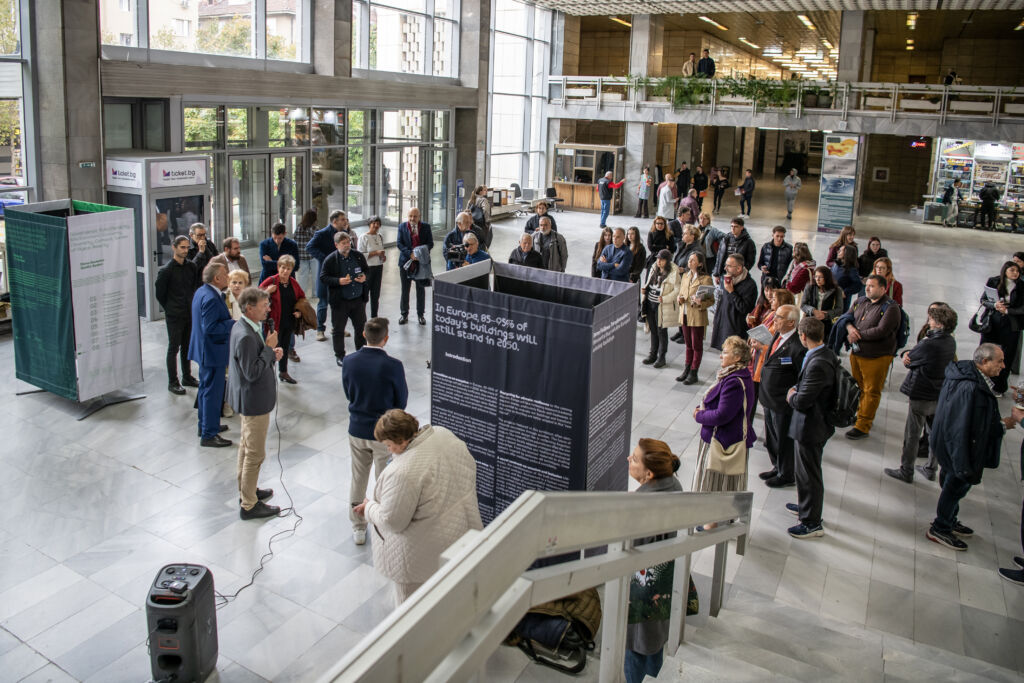
The forum opened on 15 October with several exhibitions: the ACE exhibition Form Follows Transformation, showcasing good practices in the regeneration of Europe’s built environment; the INTERARCH international exhibition competition, featuring projects that show how European policies are being put into practice; a retrospective tracing the history of INTERARCH; and a presentation of diploma projects by Bulgarian architecture students.
ACE was represented by President Daniel Fügenschuh and Executive Board members Eugen Pănescu and Istelianna Atanassova. Istelianna, who also serves on the Council of the Union of Architects in Bulgaria (UAB), chaired the Organising Committee and sat on the competition jury. We asked her to look back on the event.
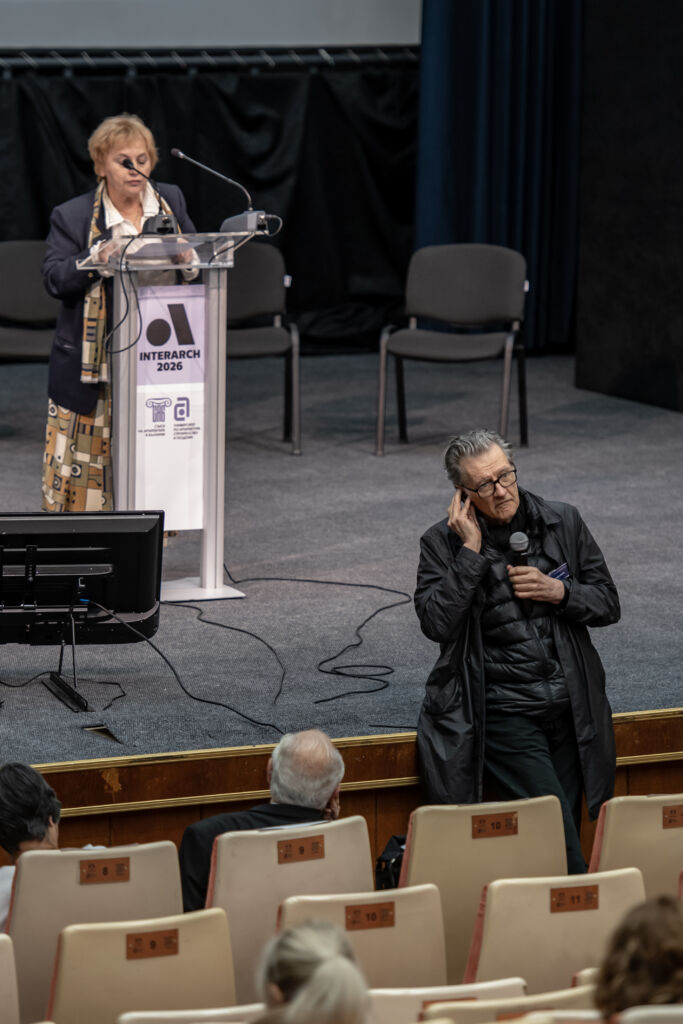
Istelianna Atanassova and Architect Jean-Philippe Vassal.
ACE: After several years away, INTERARCH is back. What made this the right moment to bring it back?
Istelianna Atanassova: INTERARCH was founded 45 years ago, in 1981. It started as a biennial and later became a triennial. The last edition took place in 2018; preparations for INTERARCH 2020 were then cancelled because of COVID-19. Now the Union of Architects in Bulgaria has relaunched this important forum. INTERARCH 2026 was free for all Bulgarian and foreign architects, including every activity and social event, and it welcomed delegations from the national architectural organisations of Georgia, Armenia, Serbia and North Macedonia.
INTERARCH is needed today not only to continue a tradition, but because it is the largest professional forum in Southeast Europe and a real opportunity for professional exchange and cooperation.
ACE: What did INTERARCH 2026 achieve?
Istelianna Atanassova: Our main achievements were:
- Reviving an iconic event for the Bulgarian professional community and the whole region.
- Bringing the theme “European Policies in Architecture – Holistic Approach to a World in Transition” to the attention of the public and policymakers, highlighting the urgent need to work together on Bulgarian strategies. We exchanged expertise with world-renowned specialists, including Jean-Philippe Vassal (Pritzker Prize 2021, France), Didier Vancutsem (Belgium/Germany), José Luis Cortés Delgado (former UIA President, Mexico) and Yasmin Shariff (UK). ACE President Daniel Fügenschuh (Austria) moderated a round table on architectural design competitions, and Executive Board member Eugen Pănescu (Romania) spoke about EU housing policy.
- Holding the international INTERARCH competition, with projects aligned with the conference theme. Entries came not only from Bulgaria but also from India, France, Armenia and Georgia. An international jury awarded the INTERARCH 2026 Grand Prize, three awards from the Union of Architects in Bulgaria (UAB), the University of Architecture, Civil Engineering and Geodesy (UACEG) and the Chamber of Architects in Bulgaria (CAB), and three special jury recognitions.
- Adopting the Sofia Declaration, a key document setting out the urgent actions national governments must take, in partnership with professional organisations, municipalities and civil society, to implement EU policies on architecture.
- Building new friendships and strengthening existing ones through meetings with the leadership of the national organisations of Georgia, Armenia, North Macedonia and Serbia.
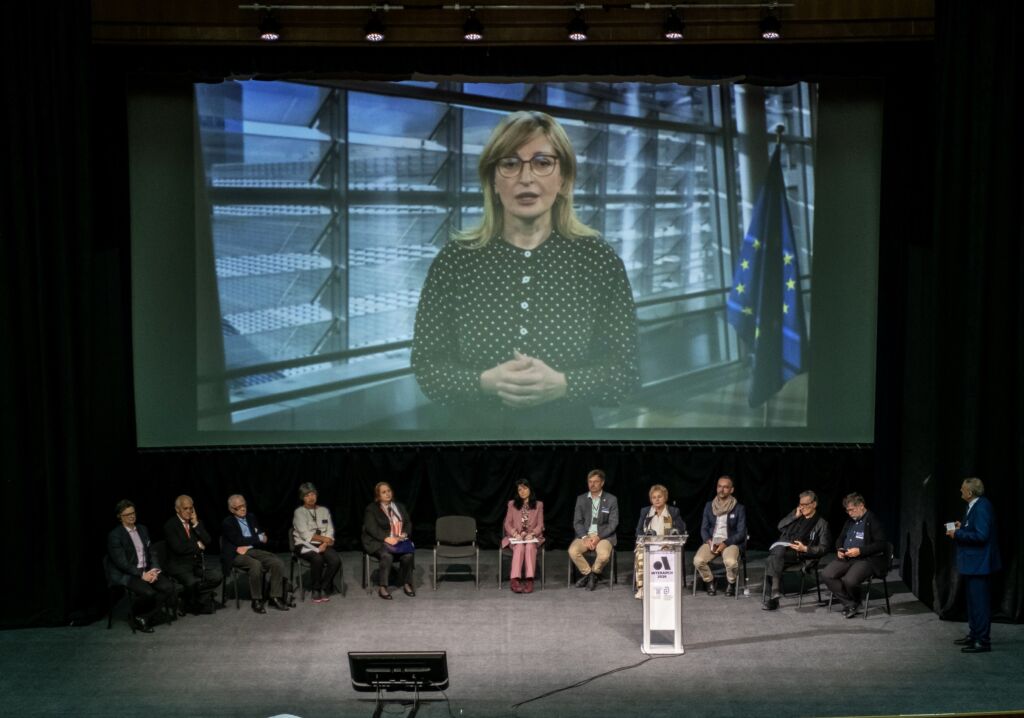
Ekaterina Zaharieva- European Commissioner for Startups, Research and Innovation
ACE: Among the exhibitions was the ACE exhibition Form Follows Transformation. Why does its message on transforming existing buildings matter in Bulgaria, and how did audiences respond?
Istelianna Atanassova: Visitors really appreciated the exhibition. The renovation of existing buildings matters everywhere, but especially in former socialist countries, where we have a very large housing stock to renovate. It is all the more urgent as Europe faces a major housing crisis. The book of the exhibited projects was distributed to visitors and to the municipal authorities of Sofia and Plovdiv, where our guests held fruitful meetings with the deputy mayors and their teams.
ACE: You sit on the boards of both the Union of Architects in Bulgaria and ACE. What one message would you like architects across Europe to take from INTERARCH 2026?
Istelianna Atanassova: The message is: TOGETHER and NOW. It is well known, but too often ignored. Now more than ever, we need to unite the power of state and municipal authorities with the expertise of professional organisations and the engagement of civil society. We cannot wait any longer; we must act now. Only together can we reach our goals, create a better life for everyone and protect nature.
The Sofia Declaration, the jury minutes, and photos and videos of the event are available on the INTERARCH 2026 website.
Picture credits: INTERARCH 2026