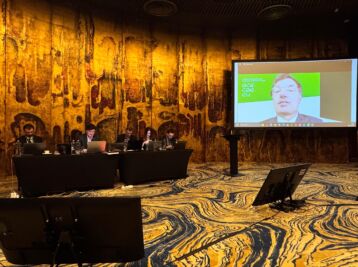
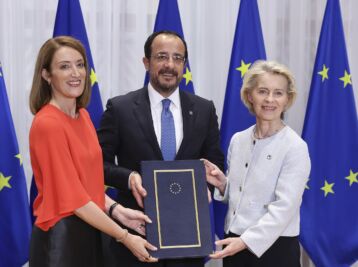
Living Spaces est un programme d'apprentissage par les pairs conçu pour que les collectivités locales et régionales apprennent à planifier et à mettre en œuvre des politiques et des projets architecturaux de haute qualité. De juillet 2023 à novembre 2024, le programme a facilité les échanges entre les villes, les régions, les États membres et les parties prenantes concernées de l’UE sur les processus et les bonnes pratiques.
Financé par le programme Europe créative de l'Union européenne, Espaces de vie a été mis en œuvre par Eurocités et le Conseil des architectes d’Europe.
Espaces de vie Catalogue
Explorez le Catalogue Espaces de vie avec 30 bonnes pratiques provenant de 17 pays européens et des informations sur la gestion, le budget et les idées transférables afin d’inspirer d’autres villes et régions à mettre en œuvre leurs propres projets.
Le catalogue s'adresse aux collectivités locales et régionales, aux professionnels de l'architecture et de l'urbanisme, ainsi qu'à toute personne intéressée par un environnement bâti de qualité, durable et inclusif.
Visites d'apprentissage par les pairs dans les espaces de vie
Espaces de vie organisé 12 visites d’apprentissage par les pairs sur la base de bonnes pratiques dans les villes et régions européennes. Les visites d’apprentissage par les pairs ont été l’occasion de voir de première main comment d’autres villes et régions ont mis en œuvre des politiques et des projets contribuant à un cadre de vie de qualité pour tous.
Les visites ont également offert des possibilités de mise en réseau et ont permis de mettre en relation des pairs, des experts et des parties prenantes concernées de différents horizons et villes/régions.
Rapports d'apprentissage par les pairs sur les espaces de vie
Les premiers rapports de visites d'apprentissage par les pairs LivingSpaces sont sortis!

Citizen participation and urban development in Cáceres
This report is based on a Living Spaces peer-learning visit that took place in Cáceres (Spain) on 20 and 21 March 2024. The visit followed the selection of the process of redevelopment of the Santiago square in Cáceres through an open call for good practices in 2023.
The redevelopment process of the Santiago Square in Cáceres was chosen as one of 30 exemplary practices embodying high-quality architectural principles in Europe, thanks to its participative decision making process. The process exemplifies the values promoted by the New European Bauhaus and aligns with the principles of “Baukultur” as articulated in the Davos Declaration. This approach aims to enhance social cohesion and quality of life by prioritising the human element and integrating comprehensive solutions, such as sustainable resource use, citizen participation, cultural heritage preservation, improved public spaces, and social diversity. This participatory approach fosters a sense of community and connection among residents, contributing to a safer and more resilient society. Cáceres, a historic city with a UNESCO World Heritage-listed walled city since 1986, includes Santiago Square within its buffer zone under a “Special Protection Plan.” The redevelopment aligns with multiple local and national legal and planning frameworks, including the Spanish Urban Agenda. Several related public and private projects addressing luxury tourism, parking, natural revitalisation, and cultural infrastructure were connected to the redevelopment effort. The project addressed key site improvements, including accessibility, leisure, parking, cultural identity, aesthetic enhancement, safety, and mitigating the heat-island effect in Cáceres. The Official Association of Architects of Extremadura facilitated effective dialogue between city agencies and residents, who actively participated in the discussions. A catalogue of requirements was developed and integrated into an open competition for ideas, with a jury of residents and experts selecting a Spanish architecture office as the winning entry. This collaborative process of discussion and collective visioning represents a redesign of local decisionmaking paths, characterised by transparent and thorough transversal collaboration. The dialogue incorporated related initiatives and principles of heritage conservation, cultural identity, and contemporary design, balancing ideal scenarios with practical, feasible solutions.
Download the report ici.

Smart cooperation for urban development : social mix in the Blumengroßmarkt in Berlin
This report is based on a Living Spaces peer-learning visit that took place in Berlin (Germany) between 11 and 13 March 2024. The visit followed the selection of the Blumengrossmarkt development in Berlin through an open call for good practices in 2023.
A wasteland around the Jewish Academy in the former flower market (Blumengrossmarkt) in the centre of Berlin offered the opportunity to transform a socially stigmatised neighbourhood into a more diverse urban area. The transformation followed the ideal of the mixed city facilitating the coexistence of different actors and using a co-creative approach. The redevelopment of the former Blumengrossmarkt is a good example of a cooperation between the public bodies and public interest driven developers to develop a lively, mixed-use area that opens to its surrounding social housing neighbourhood and provides various spaces for multiple uses in high-quality architecture buildings
Download the report ici.

Developing the city to foster sustainability and conviviality in Toulouse
This report is based on a Living Spaces peer-learning visit that took place in Toulouse (France) from 10 to 12 April 2024. The visit followed the selection of the Toulouse Booklets through an open call for good practices in 2023.
Toulouse is known for its historical centre and the distinctive architecture of the pink brick buildings. Home to important University faculties and business hubs, vibrant and with a renowned quality of life, Toulouse attracts 5000+ new residents every year. In this context, availability of housing is a prominent challenge, coupled by climate crisis events, such as heatwaves. Architecture and urban planning practices gain importance in this context. State of art mobility solutions and climate infrastructure are being constructed while Toulouse strives to valorise its architectural heritage and to offer living spaces for its residents and their diverse needs. Toulouse has to preserve, support, renew and restructure important parts of the urban environment while remaining consistent towards its strategic objectives. The Urban Planning Department is supported by the political leaders and a very comprehensive legal framework that points to the same directions. Yet, implementing such changes requires hard and soft powers: a solid plan as a basis for negotiations.
Download the report ici.

Urban planning for and with women
This report is following a Living Spaces peer-learning visit in Vienna that took place between 15 and 17 May 2024. The visit followed the selection of the process of the gender planning-centred efforts in Vienna through an open call for good practices in 2023.
The Living Spaces visit to Vienna provided a comprehensive view of the city’s approach to urban development, with a particular focus on gender-inclusive design, social housing, and sustainable practices. Over two days, a delegation of representatives from cities, regions, architects and urban planners explored various projects and engaged with local experts to understand the city’s strategies and challenges. Vienna’s commitment to gender-inclusive design was evident in initiatives like Frauen-Werk-Stadt I, where housing was designed with women’s needs at the forefront. By incorporating features that facilitate housework and care work, promote community building, and ensure safety, the city aims to create more equitable living environments for all residents. The city government has a Municipal Department dedicated to Women’s Affairs (responsible for promoting the empowerment of women in the city). Vienna has adopted gender mainstreaming in a number of areas of city administration, but it has had the greatest impact within urban planning. The city’s dedication to social housing, was also a highlight of the visit. Through public subsidies and strategic planning, Vienna has maintained a significant stock of affordable housing, providing secure and accessible accommodation for a large portion of its population. This approach has played a crucial role in creating social cohesion and addressing housing inequality. Central to Vienna’s housing model is the principle of inclusivity, which seeks to create mixed-income neighbourhoods and prevent socioeconomic segregation. One notable aspect is Vienna’s long-standing commitment to public housing, which dates back to the early 20th century with the emergence of ‘Red Vienna’: this historic period (1918-1934) when the Social Democratic Workers’ Party of Austria (SDAP) maintained almost unilateral political control over Vienna saw the implementation of progressive social policies aimed at addressing housing shortages and improving living conditions for working-class residents. The legacy of Red Vienna continues to shape Vienna’s approach to housing, with a focus on providing affordable, high-quality accommodation for all residents
Download the report ici.

Brussels’ bouwmeester: maître architecte
This report is following the Living Spaces peer-learning visit in Brussels that took place between 17 and 19 June 2024. The visit focused on the role, instruments and impact of the Bouwmeester Maître Architecte (BMA) (Government Architect or Chief Architect) of the city.
The Living Spaces peer-learning visit in Brussels focused on the role, instruments and impact of the Bouwmeester Maître Architecte (BMA) (Government Architect or Chief Architect) of Brussels. Operating within the Brussels-Capital Region, the mission of the BMA and its team is to promote the quality of urban space, both architecturally and in terms of urban planning and public space design in the Brussels Capital Region, thus driving forward Brussels’ ambitions in urban development. The BMA is an independent position, whereas his team is employed by the regional planning authorities, being responsible for assisting, advising and encouraging public and private clients, using a variety of tools that have been developed since the creation of the role in 2009. The BMA is publicly financed but remains an independent body that does not belong to any particular administration, and it is not tied to any political party. This allows the BMA to work transversely, breaking silos and working both in and outside of the system. In this context, BMA office makes use of four main soft power tools: Design Competitions, Research by Design, Design Review and BMA Label. In addition, the BMA also utilises diverse communication channels to promote, convince and raise awareness about the importance of architecture and urban design quality across and beyond the Brussels-Capital Region
Download the report ici.
More reports coming soon! Stay tuned here!